22 February 2026

#22 - Spirited Away (2001)

This poem was inspired by Spirited Away (2001) which was one of my favourite films when I was in school. It’s a Japanese animated fantasy film written and directed by the legendary Hayao Miyazaki. A big part of the story revolves around the main character losing her name. Names and naming are a really common theme in stories and folklore, so that was what I focused on for my sonnet. 


#22 – Nameless
an answerless non-riddle

My name is in the swaying of the elms,
the humming birds, all gathering at dusk.

A solitary sound, a darkened realm;
my name’s the pecan, shielded by the husk.

A moniker, inscribed upon my chest,
my name’s the word the finches know by heart.

My name is lightning, my name is suppressed,
a flicker, flaming brightly through the dark. 

A lost lament, my name is happenstance,
a floating orchid, swirling in the swell,

my name resides in roses, when they dance;
my name’s the chemical that splits the cell.

If you can name me, I’ll be yours to keep.
My name is in the earth. It’s buried deep. 


LM 


Image via IMDB


21 February 2026

#21 - Shepherd's Pie For Ewe

 #44 Killer of Sheep (1978)


I am the shepherd – probably the best

you’ve ever seen. Popular with sheep 

the sheep, they love me. Last guy, he just messed

up everything. I fixed it: one clean sweep.


You seen the markets? Wool is up a bunch –

we’re looking at a boom that never ends!

Triumphal mutton will be served at lunch

and also lamb (for just my closest friends).


Another savvy deal: dinners, meet diners!

see, this is doing business in the pro’s!

Ignore my bogus critics and maligners:

I am the greatest – everybody knows

the deaths so wrongly charged to my account

were just the black sheep – clearly they don’t count.

AWB


for the video of the poem, visit Andy's Patreon

20 February 2026

#20 - Long Division

(Russell J Turner)

This year we are using films from the Sight and Sound 2022 list as prompts

Fifth up from me is Rainer Werner Fassbinder’s Fear Eats the Soul (1974 - #52), heavily informed by my own experience of love across an age divide


For you are so much younger yet possessed
with wisdom way beyond my scatterbrain ‒
we meet in bars, we shelter from the rain,
cocooned from animosity and jest.
We build a monument to stand the test
of time and love, to sing an old refrain
which slowly fades into a frosty pain ‒
we feather and then flee our little nest

But this is not some different land or age
or circumstance, we do not face the fear
and ignorance that others must abide ‒
conclusion comes from what I cannot cage,
the darkness that in time may disappear
beneath the waters of some tranquil tide


RJT


19 February 2026

#19 - 22⅘% of 8½

Fay Roberts’s fifth sonnet this year is inspired by Federico Fellini’s metatextual bit of sophistry, the Italian movie, 8½ (1963), written by Federico Fellini, Tullio Pinelli, Ennio Flaiano, and Brunello Rondi, and starring Marcello Mastroianni, Anouk Aimée, and Claudia Cardinale. The first 31:30 made a strong impression…

Of all the tropes that I despise in art
it’s this one that can bore me in a trice:
that every single character, each part’s
despicable, with no redeeming slice

of virtue, humour, sweet humility,
affection for their friends, or even half
an ounce of kindness, unless they’re to be
discarded, punished, nameless, fatted calf.

And worse! Fellini knows he’s got a dud!
He makes the writer tell us to our face!
He hopes to smear his audience with crud,
to make us all complicit in this waste.

I’ve failed my challenge: watch each doled-out reel.
But I won’t play the voyeur for this heel.

Black and white still of two white, suited-and-tied, bespectacled, middle-aged men seated somewhere brightly lit, at night. The man on the left, in the foreground, is well-built, wearing a black suit, with a white shirt and black tie. He has thick, mostly silver, swept-back hair, and he is looking to something out of shot on our left, right hand cupped over his nose, and a somewhat disdainful expression on what we can see of his face. Behind him, the cadaverous, balding man to the right is hunched over, leaning in and facing someone or something out of shot to our right. His suit jacket is white and his glasses thicker and less chic. he has his mouth open and is probably the person speaking as subtitled: 'some people's ideas are clear enough'.
The precise moment where I tapped out


If you have access to the BFI (which I won’t shortly because my free trial runs out), you can watch the 2:18 long, multilingual (but mostly Italian) movie here. Content warnings include: misogyny, xenophobia, toxic relationships, suffocation. Let us know what you thought if you’ve seen it! But please don’t try to tell me I’m a philistine for tapping out. That won’t go well.

18 February 2026

#18 - Close Up (1990)

This poem was inspired by Close Up (1990), an Iranian film written, directed and edited by Abbas Kiarostami. The film recounts the true story of a man who pretends to be a famous Iranian film director. Does he do this to defraud people out of their money? Or to escape his own life? Or just because he loves cinema so much? You’ll have to watch the film to find out. Close Up includes real footage from the man’s trial, as well as reconstructed scenes, featuring all the people who were involved. Con artists are very fashionable at the moment, and I’ve also just finished reading House of Leaves, so the poem gets a bit labyrinth-y, a bit minotaur-y here and there too.  


#14 – Walking backwards into air 

A man can be accused of minor flaws:
of indiscretion when his temper flares,
of walking backwards, slow, into the air,
of leaving all his guts upon the floor.
On sultry nights, a cold frustration flares: 
I cannot stand myself a moment more!
I am the maze; I am the minotaur.
Identities ephemeral as air.
One person ends, another one begins,
with prospects now as wide and blue as sky,
an echo of the pure and the profane. 
And, when that life’s coherence starts to thin,
an alter-ego lands, a subtle lie,
and suddenly the world is new again!


LM 


Image via Wikipedia


17 February 2026

#17 - Necessary Coups

#50 - les Quatre Cent Coups (1959)


The art evolves, but slowly – glacial pace.

Divergence rattles, comfort is narcotic;

as careful rehashed bankers win the race,

and torpid lies the culture – dull, sclerotic.


I understand, I get it – writing sonnets

is hardly avant-garde – my aging mind

just bimbles out in verse whatever’s on it:

new innovations might leave me behind.


I still say evolution needs a shove –

no gentle nudge, but something firm and drastic;

not intervention’s calm, supportive love,

but revolutionary, iconoclastic.

So man the barricades, and raise the flag –

a boy, alone, freeze-frame: la nouvelle vague.

AWB


for the video of this poem and more, visit Andy's Patreon

16 February 2026

#16 - all vessels break and then remake themselves

(Russell J Turner)

This year we are using films from the Sight and Sound 2022 list as prompts

Fourth up from me is Kenji Mizoguchi’s Ugetsu (1953 - #92), through its theme of the treatment of women in warfare, and the metaphor of pottery


From clay they come, by hand or history,
each fashioned for a purpose or by fate ‒
a jug, a bowl, three women annotate
old monuments of joy and misery.
By brothel, drunken spear and jealousy,
two bend under the stratagems of hate.
The third arises from a charred estate ‒
a phoenix of desire, of loyalty

Yet those who walk in darkness walk in light,
each in their own way casting off the past ‒
one reconciles the future with the fight,
one sings beyond the grave, content at last.
Through warfare, rape and death, through love and spells,
all vessels break and then remake themselves


RJT


15 February 2026

#15 - Les Témoins

Fay Roberts’s fourth sonnet this year is inspired by Agnès Varda’s nouvelle vague observational tragedy (can you tell I’ve no idea how cinema language works?), French movie, Cléo from 5 to 7 (1962), written by Agnès Varda, and starring Corinne Marchand, Antoine Bourseiller, Dorothée Blanck, and Dominique Davray

She turns the cards out one by one to see
the only colour in this tense affair.
But please don’t make a fuss, ma belle chérie –
you’ll mar this mask they need of savoir faire.

We flirt with luck, and check the numbers twice;
I don’t have time to list out all the signs
the auteur uses in this room’s device.
Ça ne fait rien – this angel’s not resigned.

What hope she has is sculpted in the curve
of friendship; stares define what she’ll become.
Grotesqueries abound at every swerve,
but c’est la vie – hold fast and chew your gum.

Mais si tu n’est pas fort, la chance prévaut,
car sinon l’avenir arrive… trop tôt.

Black and white still of a close-packed crowd of people staring through a large, ground-level window which has small impact hole radiating cracks. Most of the crowd seem either dispassionate or somewhat gleefully intrigued. A statuesque, platinum-blonde woman to the right of the image, wearing black, with an ornate, metallic pendant around her neck resembling an upside down pocket watch looks blankly devastated. To the left of the image, a tall, thin, white man wearing a white, textured polo shirt with the buttons undone over a white teeshirt is staring at the woman.
Still sourced via The Criterion Collection


If you have access to the BFI, you can watch the 1:30 long, French language movie here. Content warnings include: medical concerns, cancer, period-typical misogyny, grotesque street theatre, racism. Let us know what you thought if you’ve seen it!

14 February 2026

#14 - Chungking Express (1994)

This poem was inspired by Chungking Express (1994), a Hong Kong comedy-drama written and directed by Wong Kar-wai. It’s an anthology film, featuring two interlocking stories about love, proximity and non-traditional expressions of intimacy. The perfect film to write about on Valentine’s Day! 


#14 – In the bar that you loved, I always almost see you 

your floral perfume lingers like a kiss
your menthol cigarettes reduced to smoke
we’re always never meeting here like this 
you are a conjuring produced from hope

proximity is such a fickle friend
uniting us in space but not in time
I write my name on napkins to pretend
that I am yours and that you might be mine

but we were destined to be passing ships
though once I thought I saw you by the door
I caught a fading smile around your lips
a smile I’d seen a thousand times before

an apparition bathed in pink neon
your perfume lingers longer now you’ve gone


LM 


Image via Wikipedia


13 February 2026

# 13 - Andrei by Andrei by Andrei by Andy


Where art is colour, life is monochrome –

regardless of the medium one chooses;

we need bright jesters, spurred by faith and muses

to pierce the waning of a greyscale gloam.


Hominid hands adorned sepulchral homes

to ease the pains of Neolithic bruises;

downtrodden slaves’ graffiti still amuses

amidst the dusty ruins of ancient Rome.


a toddler’s rainbow – light chromatic bridge

to soothe the hunger of a barren fridge

a vibrant tune, kaleidoscopic ditty

to cheer your view across a dismal city


We thirst for Art – the art must never stop;

but still: fuck off with all your AI slop.


AWB


for the video recording and more, visit Andy's Patreon 

12 February 2026

#12 - The Pilman Radiant

(Russell J Turner)

This year we are using films from the Sight and Sound 2022 list as prompts

Third up from me is Andrei Tarkovsky’s Stalker (1979 - #43), with a sort of stream-of-consciousness interpretation of its source material, Roadside Picnic by the Strugatsky Brothers


Regrets the mythic monument consoled
Oblivion with fortune in its fold
Advance, retreat where legends come untold
Do Not Pass Go as heat melts into cold
Sing shattered flowers faded by the stone
Intelligence has left you all alone
Down deep by ways imagined and unknown
Exulting onwards, backwards bone-by-bone

Perhaps our reasoning concludes too quick
Incomers from the cosmos, shoot and trick
Chimeric ghosts through deathly candlestick
Now cancer boils beyond the river bed
In colour bleached, in colour left unsaid
Come let your monkey save you from the dead


RJT


11 February 2026

#11 - On Seeking Warmth

Fay Roberts’s third sonnet this year is inspired by Billy Wilder’s screwball/ gangster/ romantic comedy (kinda), USAmerican movie, Some Like It Hot (1959), written by Billy Wilder and I.A.L. Diamond (from stories suggested by R. Thoeren and M. Logan), and starring Marilyn Monroe, Tony Curtis, and Jack Lemmon.

She says she loves the ones who play the sax
and, bitterly, she knows she’s in their thrall.
But now, in sweet escape, she finds that all
her wonder is encompassed in cold facts,
because it’s not the instrument that lacks
it’s her, existing dimly, sipping gall,
anticipating some or other fall,
while hope remains a glimmer in the packs.

If peace is what she’s seeking, heaven knows
she’ll never find it, playing with a band,
and millionaires don’t drop out of the sky.
So she’ll confide, and cross her fingers, grow
in confidence, while all this time a man
is lurking, as a perfect, single spy.

- FAR

Black and white still of three femme-presenting, white people. One (played by Marilyn Monroe) is seated, dressed in sheer, glittering white, platinum curls pinned close to her face, gazing off with a dreamy smile. The others are dressed in glittering black, with black headbands holding their darker hair in place as they gaze at the woman in white. One (played by Tony Curtis) is seated, and gazing at Monroe's character with an expression somewhere between intrigued and calculating. The other (played by Jack Lemmon) is standing, clutching the neck of a double bass and giving Monroe's character a look somewhere between puzzled and irritated. They all wear identical, dangling, glittery earrings, and the two instrumentalists have identical, glittery chandelier necklaces on, while behind them all are long, heavy stage curtains.
Still from the movie via the New York Times


If you have access to MGM+, you can watch the 2:01 long, English language movie here. Content warnings include: gang violence, Prohibition, alcoholism, and misogyny. Let us know what you thought if you’ve seen it!

10 February 2026

#10 - Portrait of a Lady on Fire (2019)

This poem was inspired by Portrait of a Lady on Fire (2019) directed and written by Céline Sciamma. This is the first one on my list that I’ve actually seen, and it was a joy to use the themes of the film as a jumping off point for a poem. However, in thinking about a lady under water, I was also drawing on a short film called The Deepest Dance by André Musgrove and Ariadna Hafez, and the last book I read, Private Rites by Julia Armfield. 

Content note: Poem contains references to drowning. 


#10 – Portrait of a Lady Under Water

The day is shaking loose around its joins: 
the storm is breaking, making for the shore.
As raindrops fall like fractious, freezing coins,
all warnings lost in tempest’s surge and soar. 

My footing slips, I stumble from the quay;
the ocean swells around me, like a spell.
My burning lungs a painful augury 
of life and death in perfect parallel.

The world a blue and bruising monochrome
submerged between the surface and the deep,
I feel at once tenacious and alone, 
I feel the overwhelming urge for sleep.

And, though the lights around are growing dim,
I gather all my courage, and I swim.


LM 


Image via Unsplash

09 February 2026

#9 - Joy In Ashes

 La Regle Du Jeu, 1939


Some games are more for playing than for winning

the rules are there to gently guide the fun

to leave the players satisfied and grinning

enjoyment trumping prizing who has won

this take of mine – more sinned against than sinning –

once had monopoly (forgive the pun)

the golden rule, writ large from the beginning

an infant maxim, taught to everyone:


It’s not the winning, but the taking part!

consoling oft, to mitigate the tears,

as toddlers meet and greet their maiden loss;

and worth repeating to those grumpy farts

whose jealous, urn-ward glances last for years –

it’s much more fun when one don’t give a toss.

AWB


for the video of this poem and more, visit Andy's Patreon

08 February 2026

#8 - Door of No Return

(Russell J Turner)

This year we are using films from the Sight and Sound 2022 list as prompts

Second up from me is Djibril Diop Mambéty’s Touki Bouki (1973 - #66), primarily influenced by my own visit to Senegal and Dakar about thirty years ago, particularly Île de Gorée and Maison des Esclaves (plus a small anachronistic nod to the Paris-Dakar)


The road to Paris ploughs through seas and schemes ‒
this motorbike won’t navigate those sands
whose shifting currents hide the whispered lands.
As ships sail out to all the world’s extremes
not far from Gorée’s echoed age-old screams,
where memory and monument still stands
to mark the manacles and fiery brands
that bled to manifest another’s dreams

Within the embassies we wait and yearn
for slips of paper worth their weight in gold,
as dimly then distinctly we discern
hyenas that bamboozle, thieve and burn
foundations of the constructs we’ve been sold ‒
illusions of departure and return


RJT


07 February 2026

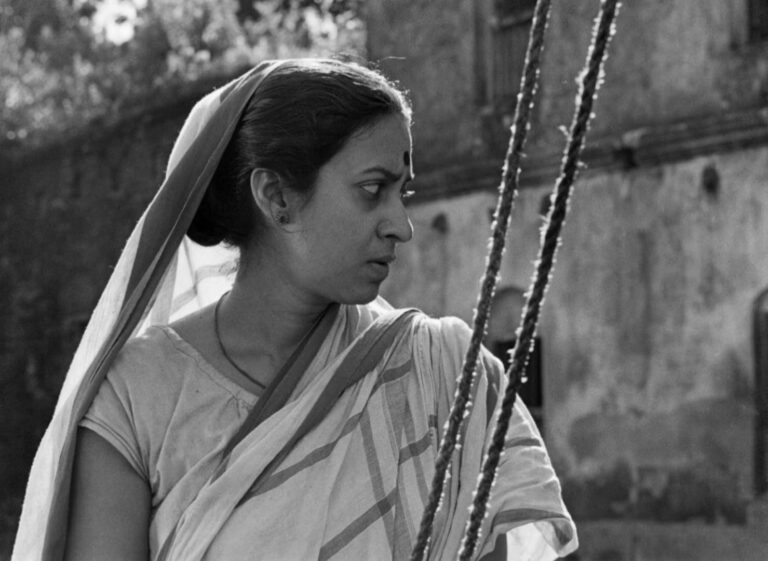
#7 - A Ragged Train

Fay Roberts’s second sonnet this year is inspired by Satyajit Ray’s groundbreaking novel adaptation: Bengali movie, Pather Panchali (1955), written by Bibhutibhushan Bandyopadhyay (author of the autobiographical novel) and Satyajit Ray, and starring Kanu Bannerjee, Karuna Bannerjee, Sarbojaya Ray, Chunibala Devi, Uma Das Gupta, and Subir Banerjee.

A mother’s worries never seem to end,
and father’s dreams are solipsistic, vast,
so what is she to do but scrape and mend,
and cling to hopes betrothed to class and caste?

A web of obligations resonates
in sickness and in health, and dimly lit.
As seasons come and go, she numbly waits,
her daughter not content to fret and sit.

She runs, and climbs, and perturbates, and cares,
and swears that she will never be a wife.
And what’s the punishment for she who dares
the crime of wanting better for her life?

You’ll find out, being hitched to faulty stars,
what disappointing creatures poets are.

Black and white movie still of an Indian woman in her 30s with her head turned to one side, a fold of her white sari with checkered stripes covering the back of her sleekly pulled-back, black hair. In front of her two thin, taut ropes, behind a high wall with domes windows set in it. Her brow is furrowed, and she looks tired and pensive.
Image of Karuna Bannerjee as Sarbojaya Ray from the Cinematograph review

If you have access to Wikipedia, you can watch the 2:04 long, Bengali language movie here (or on Amazon Prime with very different subtitles and worse image quality). Content warnings include: poverty, death, casual family violence. Let us know what you thought if you’ve seen it!

06 February 2026

#6 - Late Spring (1949)

This poem was inspired by the film Late Spring (1949). It was by directed by Yasujirō Ozu, and was produced in Japan during the American occupation after the Second World War. I was especially interested in the aspects of the film that were censored (mentions of American bombing and occupation, and the Japanese traditions that do not align with American values specifically) and how the Ozu skirted these rules to make something that still resonates with Japanese culture at this time and place. You can read more about that on Wikipedia here, if you like.  


#6 – Tiny Acts of Rebellion  

I cannot write of city ruins here,
our script is flipped; the harrowing erased.
The absence curves, like question marks in space:
the gauzy veil of history hangs sheer. 

I cannot tell of occupation now:
it lies, like rubble, hidden from the lens.
And I’m reduced to shaking, making sense 
of censorship and all it won’t allow.

But, in the mise-en-scène, you’ll see it clear:
the English words, the Coca-Cola sign.
On celluloid, the darkened shadows shine,
the bleakness in the staging, rendered here. 

A portent, camouflaged for us to find;
rebellion as subtle as a sign.


LM


Image from Late spring (1949) from Wikipedia


05 February 2026

#5 - das Feuer, die Stimmen, die Qualen

M, 1931


Some poets say that writing’s a compulsion –

like somehow, they’re afflicted with a curse;

they speak in terms of horror and revulsion

at something so benign as crafting verse.

“I need to quench demonic fire inside –

to quell demented voices, vent the rage,

and tear my psyche open naked wide –

eviscerate my torment on the page!


Suffice to say I differ from this norm –

my muse is cut from calmer cloth, it seems.

A privilege is poesy, not a duty –

the fire’s a spark that keeps me toasty warm;

the voices, long-dead poets sharing dreams;

the torment, only heartache caused by beauty.

AWB

for a video reading of this poem and more, visit Andy's Patreon


04 February 2026

#4 - shot-for-shot

(Russell J Turner)

This year we are using films from the Sight and Sound 2022 list as prompts

First up from me is Alfred Hitchcock’s Psycho (1960 - #33), along with Gus Van Sant’s pointless remake


Our Californian butchery begins
not far from Fairvale, where the Bates Motel
stands like a monument to filial sins ‒
a seedy small-town cinematic hell.

Conversant with the carnage that ensued,
some cineastes will bore us with the cast ‒
“But did you know the characters include
the wonderfully named Milton Arbogast?”

Then Gus Van Sant, in nineteen ninety-eight,
decided to completely replicate
this classic film ‒ a shot-for-shot redraft
that’s more to do with marketing than craft.
Though given Norman’s chosen tool of strife,
perhaps not shot-for-shot but knife-for-knife...


RJT


03 February 2026

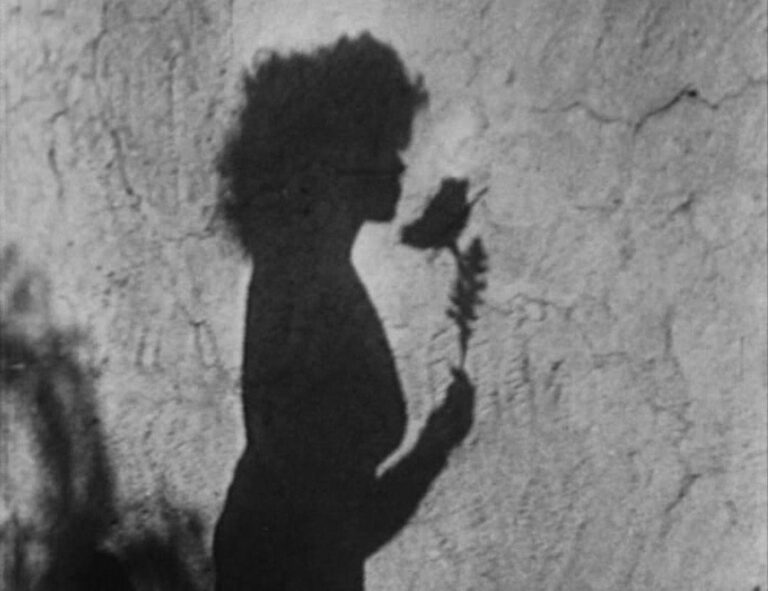
#3 - Enmeshed

Fay Roberts’s first sonnet this year is inspired by Maya Deren and Alexander Hammid’s short, surrealist, USAmerican movie, Meshes of the Afternoon (1943), written by Maya Deren, and starring Maya Deren and Alexander Hammid:

She runs and runs, but never hopes to catch
the chiffon billowing, the mirrored stare.
She rises, clambers, thinks she’s met her match.
(But who’s to say, in this dim place, what’s fair?)

It’s soft and hard, she’s bright and dark, alone?
The key’s inside, and gravity’s a glitch.
Acknowledge nodding roses, keys, and clones...
Is this prediction? Time to flip the switch.

Now tread each texture down, don’t run in place –
the sea’s a sighing echo of the land...
We rise to find the only speaking face;
this is no accident, but was it planned?

Was she possessed? What did the dream portend?
And who’s the one who’s dreaming, in the end?

a greyscale silhouette against a white wall of a person with abundant, tightly curled hair holding a large flower to their face
still of the movie, from of the review on THE CINEMATOGRAPH

If you have access to the Internet Archive, you can watch the 0:14 long, mostly wordless movie here. Content warnings include: implied violence, unreality, blood, nightmares. Let us know what you thought if you’ve seen it!

02 February 2026

#2 - Beau Travail (1999)

This poem was inspired by the 1999 French film Beau Travail, which was directed by Claire Denis. The film is set in the former French colony of Djibouti, and the main characters are all French Foreign Legion soldiers. I haven’t seen the movie (yet) but as I was reading the plot description online, I was struck by the themes of power, cruelty and disorientation in the story. These were the things that were swirling around in my mind when I wrote this poem.  It’s also my first time playing with an unrhymed lines in a sonnet – sacrilege! 


#2 - Good Work 

In this expansive openness, we men
are gods, and just like gods, we seek to cause 
destruction of our fellow deities;
a desert of our twisting spite and shame. 

This heat incites each man to lose his way – 
his empathy a glittering mirage.
This heat incites each god to dissipate –
and we are left as devils on the sand. 

The work is always harder than it seems,
and gods and men are harder, still, to bid.
The desert swallows all, no compromise;
it swallows, spits, and saves us from ourselves. 

We wanted to believe we did some good;
the wreckage, lying silent, seeping blood. 


LM


Poster Image via Wikipedia


01 February 2026

#1 - Watershed


The mountain rises ­– rain falls either side;

the river carves new courses thru the plain

the views will never be the same again

as fertile meadows form, which coincide


with fauna stirring, brash and dewy-eyed.

this metaphor’s attempting to explain

the moments I first met Charles Foster Kane –

murmuring veiled macguffins as he died.


That’s it? I wondered, What’s the fuss about?

a callow youth so sure of what he knows

too blind to spy invention’s fearless edge –

to see the context; then to puzzle out

the level land before the mountain rose

and Ozymandias in a burning sledge.


AWB


for a video reading of this poem and more, visit Andy's Patreon