Showing posts with label 28 sonnets later. Show all posts

27 February 2026

#27 - Strange Beasts Arrested

Fay Roberts’s final sonnet this year is inspired by Apichatpong Weerasethakul’s romantic, mythic, surreal creation, the Thai movie Sud Pralad (2004), written by Apichatpong Weerasethakul, and starring Banlop Lomnoi, Sakda Kaewbuadee, and Huai Dessom

I do not want to watch this film tonight.
Don’t get me wrong: I want to see the thing,
to get engaged with strangers’ layered plights,
suspend myself, and feel my spirit sing.

The critics call it vivid, taut, and lush;
ambitious, beautiful, and quite surreal.
The thing is – art that good should not be rushed,
but, damn it all: I signed up for this deal!

Well, fine, I’ll check the platforms it was on;
both English phrase and Thai to be quite sure…
It’s disappeared; it’s vanished – up and gone!
So was it ever there, or just a lure?

It seems they’ll have to wait another day
(until I’ve found a price I’m game to pay).

Green-tinged, daylit still of two Thai men, soaked to the skin, sitting on a wooden veranda, watching the rain pummel the trees. They are sitting in profile to us, looking out to our right, the one on the left slighter, possibly younger, wearing a black and white striped teeshirt, sitting cross-legged, probably in blue jeans, and grinning a little awkwardly. The man on the right looks more relaxed and amused, wearing a khaki teeshirt and camouflage trousers, legs canted in front of him, arms propped along his shins.
Image from the Sabzian listing of the press kit for the movie

Humph! I was really looking forward to this one, but was worried I didn’t have the spoons to focus on subtitles and complex, mythic symbolism tonight. Now we’ll never know! If you have access to the DVD, which is the only legal place it seems to be (and too short notice for my deadline), you can watch the 1:58 long, Thai language movie there. Content warnings include: violence, homophobia, heartbreak (I guess… from the stuff I’ve read!). Let us know what you thought if you’ve seen it!

26 February 2026

#26 - Sancho the Bailiff (1954)

This poem was inspired by Sansho the Bailiff, a 1954 Japanese period film directed by Kenji Mizoguchi. This film is about two aristocratic children who are sold into slavery in seventeenth century Japan. That felt like too big a topic for me to tackle in 14 lines, so I got distracted by the style of the film instead… 


#26 – Stories told in monochrome 

A story told in black and white may seem
archaic. I assure you that it’s not. 
It’s history. It’s certain, like a dream;
the tones are sharper, and the patterns pop.

The shadows take a darker kind of hue – 
both literal and in symbolic sense.
Without the colours, there’s nothing to do
but focus on the plot. It’s more intense,

the gravitas seeps through the monochrome
and bathes the retinas in sombre tones.
The black and white is stark as written poems;
as stark as dampened earth and pallid bones. 

As serious as colour film can be,
these black and white constraints set stories free. 


LM 


Image via IMDB


23 February 2026

#23 - Disconnected Intermissions, or: if Kubrick wrote a sonnet, it would be a Chant Royale set to Strauss

Fay Roberts’s penultimate sonnet this year is inspired by Stanley Kubrick’s epic, surreal sci-fi classic, the USAmerican movie, 2001: A Space Odyssey (1968), written by Stanley Kubrick and Arthur C. Clarke, and starring Keir Dullea, Gary Lockwood, William Sylvester, and Douglas Rain.

In pain, this late, I don’t know if I’ll last;
I tried to read the book when I was wee.
(my television’s not exactly vast)
it’s not the way he wanted us to see…

This fearful symmetry, this awful drone;
intelligence is warfare, death on hand?
And what’s a stylus but a sharpened bit of bone
rotating, waiting for the chance to land?

The choir shrills their harsh, triumphant skirls,
the people decorations, afterthoughts
(the future’s white, and all the servants girls)
a way to highlight scale, the plot for naught…

As splendid isolation is the way
this final human touch calls it a day.

Photo of a long, bulbous spacecraft in shades of white and grey with a huge, spherical front end and a thinner, jointed tail, overall looking something like a LEGO spermatozoa with a massive radar dish mounted about halfway down the tail. There is a circular opening in the head which shows bright lights inside and something smaller, but similarly shaped and coloured, emerging into space. The backdrop is completely black, with no stars showing, though that may just be the resolution of this photo...
Image from Wikipedia

If you have access to Prime Video, you can watch the 2:29 long, English language movie here. Content warnings include: violence, flashing lights, murder. Let us know what you thought if you’ve seen it! Maybe don’t watch it knackered and in lots of pain, though, unless you enjoy obsessing over tapirs in a sleep-deprived state… And conception metaphors…

22 February 2026

#22 - Spirited Away (2001)

This poem was inspired by Spirited Away (2001) which was one of my favourite films when I was in school. It’s a Japanese animated fantasy film written and directed by the legendary Hayao Miyazaki. A big part of the story revolves around the main character losing her name. Names and naming are a really common theme in stories and folklore, so that was what I focused on for my sonnet. 


#22 – Nameless
an answerless non-riddle

My name is in the swaying of the elms,
the humming birds, all gathering at dusk.

A solitary sound, a darkened realm;
my name’s the pecan, shielded by the husk.

A moniker, inscribed upon my chest,
my name’s the word the finches know by heart.

My name is lightning, my name is suppressed,
a flicker, flaming brightly through the dark. 

A lost lament, my name is happenstance,
a floating orchid, swirling in the swell,

my name resides in roses, when they dance;
my name’s the chemical that splits the cell.

If you can name me, I’ll be yours to keep.
My name is in the earth. It’s buried deep. 


LM 


Image via IMDB


19 February 2026

#19 - 22⅘% of 8½

Fay Roberts’s fifth sonnet this year is inspired by Federico Fellini’s metatextual bit of sophistry, the Italian movie, 8½ (1963), written by Federico Fellini, Tullio Pinelli, Ennio Flaiano, and Brunello Rondi, and starring Marcello Mastroianni, Anouk Aimée, and Claudia Cardinale. The first 31:30 made a strong impression…

Of all the tropes that I despise in art
it’s this one that can bore me in a trice:
that every single character, each part’s
despicable, with no redeeming slice

of virtue, humour, sweet humility,
affection for their friends, or even half
an ounce of kindness, unless they’re to be
discarded, punished, nameless, fatted calf.

And worse! Fellini knows he’s got a dud!
He makes the writer tell us to our face!
He hopes to smear his audience with crud,
to make us all complicit in this waste.

I’ve failed my challenge: watch each doled-out reel.
But I won’t play the voyeur for this heel.

Black and white still of two white, suited-and-tied, bespectacled, middle-aged men seated somewhere brightly lit, at night. The man on the left, in the foreground, is well-built, wearing a black suit, with a white shirt and black tie. He has thick, mostly silver, swept-back hair, and he is looking to something out of shot on our left, right hand cupped over his nose, and a somewhat disdainful expression on what we can see of his face. Behind him, the cadaverous, balding man to the right is hunched over, leaning in and facing someone or something out of shot to our right. His suit jacket is white and his glasses thicker and less chic. he has his mouth open and is probably the person speaking as subtitled: 'some people's ideas are clear enough'.
The precise moment where I tapped out


If you have access to the BFI (which I won’t shortly because my free trial runs out), you can watch the 2:18 long, multilingual (but mostly Italian) movie here. Content warnings include: misogyny, xenophobia, toxic relationships, suffocation. Let us know what you thought if you’ve seen it! But please don’t try to tell me I’m a philistine for tapping out. That won’t go well.

18 February 2026

#18 - Close Up (1990)

This poem was inspired by Close Up (1990), an Iranian film written, directed and edited by Abbas Kiarostami. The film recounts the true story of a man who pretends to be a famous Iranian film director. Does he do this to defraud people out of their money? Or to escape his own life? Or just because he loves cinema so much? You’ll have to watch the film to find out. Close Up includes real footage from the man’s trial, as well as reconstructed scenes, featuring all the people who were involved. Con artists are very fashionable at the moment, and I’ve also just finished reading House of Leaves, so the poem gets a bit labyrinth-y, a bit minotaur-y here and there too.  


#14 – Walking backwards into air 

A man can be accused of minor flaws:
of indiscretion when his temper flares,
of walking backwards, slow, into the air,
of leaving all his guts upon the floor.
On sultry nights, a cold frustration flares: 
I cannot stand myself a moment more!
I am the maze; I am the minotaur.
Identities ephemeral as air.
One person ends, another one begins,
with prospects now as wide and blue as sky,
an echo of the pure and the profane. 
And, when that life’s coherence starts to thin,
an alter-ego lands, a subtle lie,
and suddenly the world is new again!


LM 


Image via Wikipedia


15 February 2026

#15 - Les Témoins

Fay Roberts’s fourth sonnet this year is inspired by Agnès Varda’s nouvelle vague observational tragedy (can you tell I’ve no idea how cinema language works?), French movie, Cléo de 5 à 7 (1962), written by Agnès Varda, and starring Corinne Marchand, Antoine Bourseiller, Dorothée Blanck, and Dominique Davray

She turns the cards out one by one to see
the only colour in this tense affair.
But please don’t make a fuss, ma belle chérie –
you’ll mar this mask they need of savoir faire.

We flirt with luck, and check the numbers twice;
I don’t have time to list out all the signs
the auteur uses in this room’s device.
Ça ne fait rien – this angel’s not resigned.

What hope she has is sculpted in the curve
of friendship; stares define what she’ll become.
Grotesqueries abound at every swerve,
but c’est la vie – hold fast and chew your gum.

Mais si tu n’est pas fort, la chance prévaut,
car sinon l’avenir arrive… trop tôt.

Black and white still of a close-packed crowd of people staring through a large, ground-level window which has small impact hole radiating cracks. Most of the crowd seem either dispassionate or somewhat gleefully intrigued. A statuesque, platinum-blonde woman to the right of the image, wearing black, with an ornate, metallic pendant around her neck resembling an upside down pocket watch looks blankly devastated. To the left of the image, a tall, thin, white man wearing a white, textured polo shirt with the buttons undone over a white teeshirt is staring at the woman.
Still sourced via The Criterion Collection


If you have access to the BFI, you can watch the 1:30 long, French language movie here. Content warnings include: medical concerns, cancer, period-typical misogyny, grotesque street theatre, racism. Let us know what you thought if you’ve seen it!

14 February 2026

#14 - Chungking Express (1994)

This poem was inspired by Chungking Express (1994), a Hong Kong comedy-drama written and directed by Wong Kar-wai. It’s an anthology film, featuring two interlocking stories about love, proximity and non-traditional expressions of intimacy. The perfect film to write about on Valentine’s Day! 


#14 – In the bar that you loved, I always almost see you 

your floral perfume lingers like a kiss
your menthol cigarettes reduced to smoke
we’re always never meeting here like this 
you are a conjuring produced from hope

proximity is such a fickle friend
uniting us in space but not in time
I write my name on napkins to pretend
that I am yours and that you might be mine

but we were destined to be passing ships
though once I thought I saw you by the door
I caught a fading smile around your lips
a smile I’d seen a thousand times before

an apparition bathed in pink neon
your perfume lingers longer now you’ve gone


LM 


Image via Wikipedia


11 February 2026

#11 - On Seeking Warmth

Fay Roberts’s third sonnet this year is inspired by Billy Wilder’s screwball/ gangster/ romantic comedy (kinda), USAmerican movie, Some Like It Hot (1959), written by Billy Wilder and I.A.L. Diamond (from stories suggested by R. Thoeren and M. Logan), and starring Marilyn Monroe, Tony Curtis, and Jack Lemmon.

She says she loves the ones who play the sax
and, bitterly, she knows she’s in their thrall.
But now, in sweet escape, she finds that all
her wonder is encompassed in cold facts,
because it’s not the instrument that lacks
it’s her, existing dimly, sipping gall,
anticipating some or other fall,
while hope remains a glimmer in the packs.

If peace is what she’s seeking, heaven knows
she’ll never find it, playing with a band,
and millionaires don’t drop out of the sky.
So she’ll confide, and cross her fingers, grow
in confidence, while all this time a man
is lurking, as a perfect, single spy.

- FAR

Black and white still of three femme-presenting, white people. One (played by Marilyn Monroe) is seated, dressed in sheer, glittering white, platinum curls pinned close to her face, gazing off with a dreamy smile. The others are dressed in glittering black, with black headbands holding their darker hair in place as they gaze at the woman in white. One (played by Tony Curtis) is seated, and gazing at Monroe's character with an expression somewhere between intrigued and calculating. The other (played by Jack Lemmon) is standing, clutching the neck of a double bass and giving Monroe's character a look somewhere between puzzled and irritated. They all wear identical, dangling, glittery earrings, and the two instrumentalists have identical, glittery chandelier necklaces on, while behind them all are long, heavy stage curtains.
Still from the movie via the New York Times


If you have access to MGM+, you can watch the 2:01 long, English language movie here. Content warnings include: gang violence, Prohibition, alcoholism, and misogyny. Let us know what you thought if you’ve seen it!

10 February 2026

#10 - Portrait of a Lady on Fire (2019)

This poem was inspired by Portrait of a Lady on Fire (2019) directed and written by Céline Sciamma. This is the first one on my list that I’ve actually seen, and it was a joy to use the themes of the film as a jumping off point for a poem. However, in thinking about a lady under water, I was also drawing on a short film called The Deepest Dance by André Musgrove and Ariadna Hafez, and the last book I read, Private Rites by Julia Armfield. 

Content note: Poem contains references to drowning. 


#10 – Portrait of a Lady Under Water

The day is shaking loose around its joins: 
the storm is breaking, making for the shore.
As raindrops fall like fractious, freezing coins,
all warnings lost in tempest’s surge and soar. 

My footing slips, I stumble from the quay;
the ocean swells around me, like a spell.
My burning lungs a painful augury 
of life and death in perfect parallel.

The world a blue and bruising monochrome
submerged between the surface and the deep,
I feel at once tenacious and alone, 
I feel the overwhelming urge for sleep.

And, though the lights around are growing dim,
I gather all my courage, and I swim.


LM 


Image via Unsplash

07 February 2026

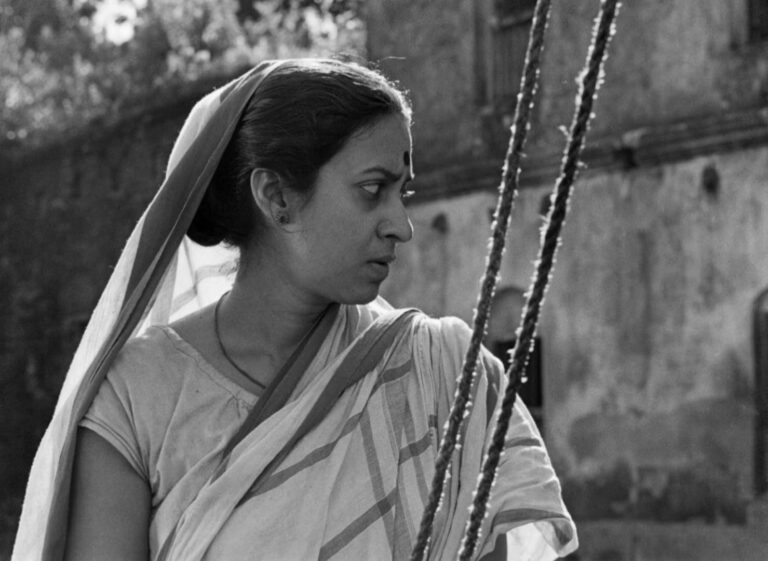
#7 - A Ragged Train

Fay Roberts’s second sonnet this year is inspired by Satyajit Ray’s groundbreaking novel adaptation: Bengali movie, Pather Panchali (1955), written by Bibhutibhushan Bandyopadhyay (author of the autobiographical novel) and Satyajit Ray, and starring Kanu Bannerjee, Karuna Bannerjee, Sarbojaya Ray, Chunibala Devi, Uma Das Gupta, and Subir Banerjee.

A mother’s worries never seem to end,
and father’s dreams are solipsistic, vast,
so what is she to do but scrape and mend,
and cling to hopes betrothed to class and caste?

A web of obligations resonates
in sickness and in health, and dimly lit.
As seasons come and go, she numbly waits,
her daughter not content to fret and sit.

She runs, and climbs, and perturbates, and cares,
and swears that she will never be a wife.
And what’s the punishment for she who dares
the crime of wanting better for her life?

You’ll find out, being hitched to faulty stars,
what disappointing creatures poets are.

Black and white movie still of an Indian woman in her 30s with her head turned to one side, a fold of her white sari with checkered stripes covering the back of her sleekly pulled-back, black hair. In front of her two thin, taut ropes, behind a high wall with domes windows set in it. Her brow is furrowed, and she looks tired and pensive.
Image of Karuna Bannerjee as Sarbojaya Ray from the Cinematograph review

If you have access to Wikipedia, you can watch the 2:04 long, Bengali language movie here (or on Amazon Prime with very different subtitles and worse image quality). Content warnings include: poverty, death, casual family violence. Let us know what you thought if you’ve seen it!

06 February 2026

#6 - Late Spring (1949)

This poem was inspired by the film Late Spring (1949). It was by directed by Yasujirō Ozu, and was produced in Japan during the American occupation after the Second World War. I was especially interested in the aspects of the film that were censored (mentions of American bombing and occupation, and the Japanese traditions that do not align with American values specifically) and how the Ozu skirted these rules to make something that still resonates with Japanese culture at this time and place. You can read more about that on Wikipedia here, if you like.  


#6 – Tiny Acts of Rebellion  

I cannot write of city ruins here,
our script is flipped; the harrowing erased.
The absence curves, like question marks in space:
the gauzy veil of history hangs sheer. 

I cannot tell of occupation now:
it lies, like rubble, hidden from the lens.
And I’m reduced to shaking, making sense 
of censorship and all it won’t allow.

But, in the mise-en-scène, you’ll see it clear:
the English words, the Coca-Cola sign.
On celluloid, the darkened shadows shine,
the bleakness in the staging, rendered here. 

A portent, camouflaged for us to find;
rebellion as subtle as a sign.


LM


Image from Late spring (1949) from Wikipedia


03 February 2026

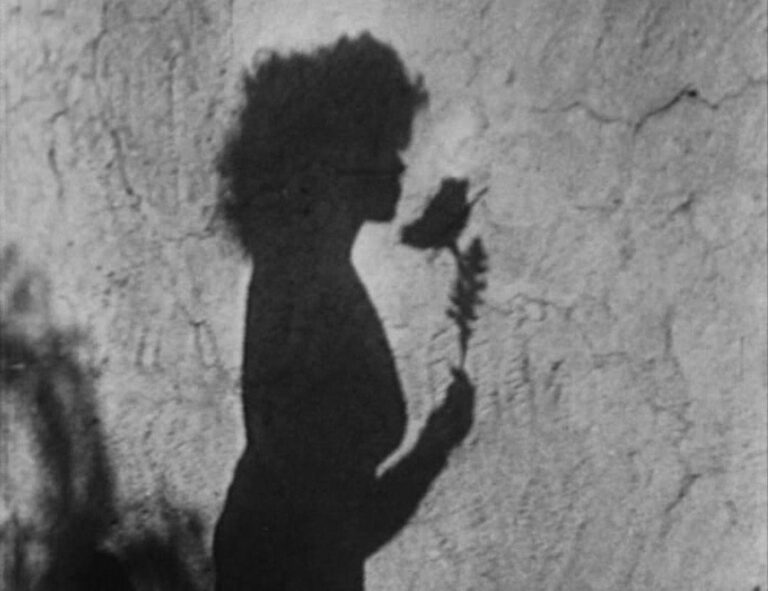
#3 - Enmeshed

Fay Roberts’s first sonnet this year is inspired by Maya Deren and Alexander Hammid’s short, surrealist, USAmerican movie, Meshes of the Afternoon (1943), written by Maya Deren, and starring Maya Deren and Alexander Hammid:

She runs and runs, but never hopes to catch
the chiffon billowing, the mirrored stare.
She rises, clambers, thinks she’s met her match.
(But who’s to say, in this dim place, what’s fair?)

It’s soft and hard, she’s bright and dark, alone?
The key’s inside, and gravity’s a glitch.
Acknowledge nodding roses, keys, and clones...
Is this prediction? Time to flip the switch.

Now tread each texture down, don’t run in place –
the sea’s a sighing echo of the land...
We rise to find the only speaking face;
this is no accident, but was it planned?

Was she possessed? What did the dream portend?
And who’s the one who’s dreaming, in the end?

a greyscale silhouette against a white wall of a person with abundant, tightly curled hair holding a large flower to their face
still of the movie, from of the review on THE CINEMATOGRAPH

If you have access to the Internet Archive, you can watch the 0:14 long, mostly wordless movie here. Content warnings include: implied violence, unreality, blood, nightmares. Let us know what you thought if you’ve seen it!

02 February 2026

#2 - Beau Travail (1999)

This poem was inspired by the 1999 French film Beau Travail, which was directed by Claire Denis. The film is set in the former French colony of Djibouti, and the main characters are all French Foreign Legion soldiers. I haven’t seen the movie (yet) but as I was reading the plot description online, I was struck by the themes of power, cruelty and disorientation in the story. These were the things that were swirling around in my mind when I wrote this poem.  It’s also my first time playing with an unrhymed lines in a sonnet – sacrilege! 


#2 - Good Work 

In this expansive openness, we men
are gods, and just like gods, we seek to cause 
destruction of our fellow deities;
a desert of our twisting spite and shame. 

This heat incites each man to lose his way – 
his empathy a glittering mirage.
This heat incites each god to dissipate –
and we are left as devils on the sand. 

The work is always harder than it seems,
and gods and men are harder, still, to bid.
The desert swallows all, no compromise;
it swallows, spits, and saves us from ourselves. 

We wanted to believe we did some good;
the wreckage, lying silent, seeping blood. 


LM


Poster Image via Wikipedia


03 March 2025

Cardinal Signs (aka Seven Sins of Fay: Full Crown)


The text of the full sonnet crown below, arranged in a kind of mandala, with the words as multicoloured spokes, the joining lines being bolded
(You would not believe how long this took Fay Roberts to put this graphic together)

Full text for the Seven Deadly Sins follows:

The gateway to the seven stands right here. 🍎
you long to touch, but cannot quite commit
to all the things that you’re supposed to fear
(while this one claims it’s fine to just submit)
it’s natural to hope, it does no harm
to gaze upon what might, in time, be yours
and how are you supposed to counter charm
designed to gloss (or venerate) its flaws?
you look, and look, and cannot look away
spend all spare moments summoning the scenes
occasional indulgence has now swayed
to frequencies and formulas obscene
and though you’re more than warmed now by this fire
you’ll gorge yourself on all you might desire 🍎
pick this and that, fill platters to the brim
the feast arrayed in front of you inspires
more active souls to hustle to the gym
that’s not your game – it’s all about the choices
that cause ascetics such a dreadful fright –
but here your inner toddler rejoices!
(now clean your plate – aught else is impolite)
the world is full of misery and heartache
and people who insist on leeching joy
so come on – might as well inhale this cheesecake
and leave them to their schemes and scowls and ploys
and though tomorrow’s gripe might make you weep
you can’t let tyrants rob you of your sleep 🍎
you need some peace and quiet for a while
just let them rant and spill out all their bile
if that’s what virtue looks like, they can keep
it, sticking to the herd with all the sheep
exert yourself? you’d rather run a mile
than keep up with the pious rank and file
it’s better to lie low than take the leap
but whispers filter through your sweet, white noise:
“This good man’s doing nothing…” outright lies!
you’re just recuperating former poise
(if wallowing was sport, you’d take the prize)
ambition stalled – those others took your toys
how dare they shout to claim your starry skies? 🍎
you think that they’d have quite enough from birth
to satisfy their hunger, stop their cries –
it’s like they don’t appreciate the worth
of everything that’s handed to them – free
and gratis, not like you, who’s had to work
to claim what meagre scraps you’ve gathered – see?
it’s more than equal treatment while they shirk
responsibilities – it’s thoughtlessness
that irks you, when all you can do is think
what luxuries you’d milk from bitterness
while, all the while, you’re clinging to the brink
of giving up on being good and kind –
they all deserve a big piece of your mind! 🍎
they say restraint is all the rage again
but leaving fools in ignorance? unkind
it’s time to crack your knuckles, lift the pen
start firm – apology is out – you must
be strong, resist the urge to soften blows
this lot must understand your cause is just
it’s just that they’re so wrong, and heaven knows
you’ve left it long enough to make it clear
you feel the righteousness race through your blood
it’s screaming now: rip down all they hold dear
the time is coming. none survive the flood
we’re more than fodder, more than fucking spares
how dare they swan around like no-one cares? 🍎
it’s easy, really: simply be the best
forsake all other notions, let the rest
diminish to a distant din downstairs
you see, they long to be as good as this
their every breath declares them second class
that panting envy fogs the looking glass –
however hard they try, they’ll always miss
but… what if they’ve a point? no, heavens – no!
no matter how they march, wave stuff, and shout
just turn the music up to drown them out
it’s all about not what, but how you show
superiority in every glance
not everyone can grab a second chance 🍎
the pusillanimous will whine and fret
but you can call the measure of this dance
since he who pays the piper owns their sweat
and tears, you can’t quite get enough of those
that saltiness is something that you crave
its glitter littering the path you chose
see, misery extends beyond the grave
there’s only so much you can rut or stuff
into your face, but this? its maw expands
with every bite, and never gets enough
and that’s what you don’t care to understand
you hold this key obscenity so dear…
The gateway to the seven stands right here.


01 March 2025

Seven Ages of Andy (full crown)


William Mulready. image credit: V&A Museum London

1.       Infancy


expectant, trepidatious, on we go:

a blooded, squalling babe, a bag of needs.

a home, a crib, a blanket, frequent feeds;

a family to shield us as we grow –

to clean our shit and teach us all they know;

applauding each new victory, and deeds

of escalating wonder; joy that breeds

a freedom bearing out Jean-Jacques Rousseau.


this isn’t my own recollection here –

but parenthood has given me mementoes,

and watching my own infants grow is fuel

to re-evaluate my early years:

a curious, stumbling journey which crescendoes

with smiles and hopeful airs, first day of school.


2.       Schoolboy


With smiles and hopeful airs, first day of school:

crisp uniform and unfamiliar tie;

new disciplines, a timetable, and rules

of social commerce; cliques to codify.

Will tests in Maths and Science be your fuel?

Athletics, French, or Music get you by?

Perhaps – like me – you’ll reach the peak of ‘cool’?

(and – decades later – know that that’s a lie.)

This skinny, gobby tryhard spent his terms

deflecting – with his gags – the fists of churls;

and, quoting Shakespeare, and the Diet of Worms,

theatrically failed to dazzle girls.

Pubescent verse, hubristic faith alone:

a portrait of a man not fully grown.


3.       Lover


A portrait of a man not fully grown –

discovered in a loft and brought to light:

a leather jacket, Yankee hat, and bright

eyes, nonchalant to facing the unknown.

He wants to love, yet still needs to be shown

that common solipsistic oversight –

the plague of every amorous neophyte –

to have a care for hearts that aren’t his own.


At that age, breaking hearts was just a game

more fun than football (I played better, too).

The fug of booze and time obscures the names,

remorseful verse rewrites the billets-doux;

Quiescent will exists to make amends,

the hope on which society depends.


4.       Soldier


The hope on which society depends:

that still the arc of History will tend

towards a cultured, genteel evolution.

“Too slow!” cry new recruits with resolution –

some take up arms to hasten their solution,

and some write poems that call for revolution.

(And to this day, both cohorts still contend

at which approach will pay more dividends.)


So yeah, I wrote some angry stuff back then:

like “Burn the System! Capital Aflame!”

 “Drown All the Priests in Slurry Made From Tories!”

But Westminster still stood, despite my pen!

And I discovered – focusing my aim –

my muse, my comrade, wreathed in loving glory.


5.       Judge


My Muse! My Comrade! Wreathed in loving glory,

words fail to scale the height of my esteem!

A bildungsroman now is this, my story:

from callow youth to half a winning team.


It’s thanks to you – in every case before me –

my judgement’s more considered, less extreme;

romantic poets might murmur “I adore thee!” –

but sometimes rhymes run deeper than they seem.


This ain’t no corny Keatsian teenage yearning,

to seem profound (and get you into bed) –

more recognition that this guy’s still learning

to be the man he promised when we wed:


a partner for your honour, sure together;

a ward ‘gainst civil strife and chilly weather.


6.       Old Age


A ward ‘gainst civil strife and chilly weather –

lock all your doors, and wear a fluffy snood;

mistrust the ‘foreigners’ (but eat their food),

bemoan the lack of feeling in your nethers.

Recite the Telegraph and think you’re clever:

“Minorities lack moral rectitude!”

Divide, deprive, harass, oppress, exclude –

defend the white man’s privilege forever.


I hope to god I don’t become my Dad.

I have no taste for droning, whining, cold –

inert as my compassion ossifies.

I’ll try to stay this shop-soiled Galahad:

still seeking truth and beauty when I’m old –

and knowing I know nothing, therefore wise.


7.       Second Childhood


I know that I know nothing – therefore wise

it is that I should hold my foolish tongue?

Well, bugger that: embarrassing the young

shall be this poet’s joy before he dies.

With knackered knees and cataracted eyes,

besotted liver, reefer-blackened lung,

I plan to leave no single song unsung –

no random thought that I won’t verbalise.

So as I bimble through my final years,

I guess I’ll try to savour every breath:

intending laughter, steering clear of tears;

and as to the unmapped that’s after death –

it’s surely half the fun that we don’t know:

expectant, trepidatious, on we go…


AWB


28 February 2025

#27 - Cupid Corrupted

Finally, and only an hour beyond the threshold, Fay Roberts finishes zir musing on the Seven Deadly Sins with the crowning horror: #Greed.

Not everyone can grab a second chance.
The pusillanimous will whine and fret,
but you can call the measure of this dance,
since he who pays the piper owns their sweat

and tears, you can’t quite get enough of those.
That saltiness is something that you crave,
its glitter littering the path you chose.
See, misery extends beyond the grave.

There’s only so much you can rut or stuff
into your face, but this? its maw expands
with every bite, and never gets enough.
And that’s what you don’t care to understand.

You hold this key obscenity so dear…
The gateway to the seven stands right here.

– FR

vast pile of red and green apples in various states of decay, from barely blemished to piles of black sludge, certainly more than any one person could eat in a year...
Image of rotting apples from Tasting Table


26 February 2025

#26 - VIOLET

Thinking about light, rainbows, visual perception, and the ultra-violet patches of colour on flowers that human eyes cannot see. 


The Unseen

Despite the darkness, we must learn to sing – 
a purpling of air, to sooth the dread
that effervesces in our throats, and brings
this swimming faint sensation to our heads. 

The atmosphere, alive with countless shades;
the microscopic teeming through our blood; 
the ultra-violet that peaks and fades,
a staining on the lip of every bud. 

We grasp to seek the colours that it exist, 
invisible in shards of shafting sun.
A spectrum of perfection, shadows twist
their neon splendour. Beauty on the run.

But, luminous, the courage flashing bright: 
the prism splits a humble beam of light.

LM


Image via Wikipedia


25 February 2025

#25 - Seven Ages: Second Childhood

Philosopher Laughing at Magick (detail)
David Teniers, c1775


I know that I know nothing – therefore wise

it is that I should hold my foolish tongue?

Well, bugger that: embarrassing the young

shall be this poet’s joy before he dies.

With knackered knees and cataracted eyes,

besotted liver, reefer-blackened lung,

I plan to leave no single song unsung –

no random thought that I won’t verbalise.

So, as I bimble through my final years,

I guess I’ll try to savour every breath:

intending laughter, steering clear of tears;

and as to the Unmapped that’s after death –

it’s surely half the fun that we don’t know:

expectant, trepidatious, on we go…


AWB

23 February 2025

#23 - Golden Age

Headache finally over, it’s time for Fay Roberts to tackle #Pride while messing with form…

How dare they swan around like no-one cares?
It’s easy, really: simply be the best.
Forsake all other notions, let the rest
diminish to a distant din downstairs.

You see, they long to be as good as this
their every breath declares them second class,
that panting envy fogs the looking glass –
however hard they try, they’ll always miss.

But… what if they’ve a point? No, heavens – no!
No matter how they march, wave stuff, and shout,
just turn the music up to drown them out;
it’s all about not what, but how you show

superiority in every glance.
Not everyone can grab a second chance.


Picture from Abraham’s Store